How Can You Design a Small Bathroom to Feel Larger?
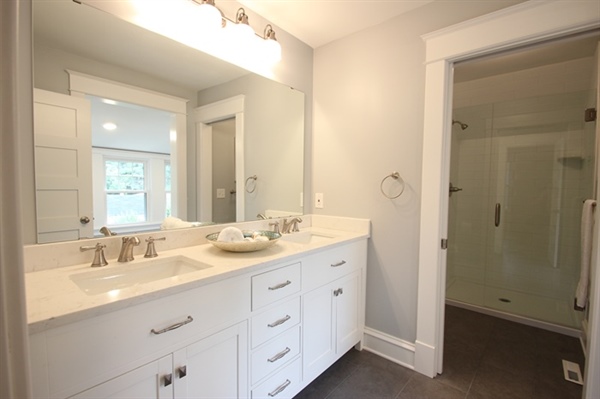
Designing a small bathroom to feel larger depends on thoughtful planning, smart visual strategies, and careful material choices. Even compact spaces can feel open and comfortable when the design prioritizes flow, organization, and visual continuity. By focusing on layout, color, lighting, and fixture selection, homeowners can transform a cramped room into a space that feels brighter and more functional. Waterstone Construction brings this concept to life by emphasizing details that shape how the eye perceives size—details that greatly influence comfort and usability during any bathroom remodel.
This article explores five key questions that homeowners frequently ask when trying to maximize small bathrooms: What layout changes improve function? How can mirrors and lighting increase perceived size? What storage solutions work best in compact spaces? How do color choices influence the sense of openness? And what types of tubs or showers are the best fit for limited square footage? Each section breaks down these topics with practical, design-forward guidance inspired by Waterstone Construction’s approach to interior remodeling in Minneapolis.
Functional Layout Changes That Make Small Bathrooms Feel Larger
A well-planned layout is one of the most effective ways to make a small bathroom feel larger. Shifting the placement of fixtures can open visual pathways and improve usability. For example, relocating a vanity to free up walking space or choosing a wall-mounted sink can eliminate unnecessary bulk. Slimmer-profile vanities and floating toilets also open the floor plane, allowing more visible tile continuity—which visually expands the room. Designers often prioritize placing compact fixtures opposite the entrance to create cleaner lines of sight when entering the room.
Another key layout consideration is reducing visual breaks. When too many elements cut across the room, the bathroom feels smaller. Aligning the shower, vanity, and storage along one wall creates a streamlined effect. Pocket doors or outward-swinging doors can replace inward-swinging options to reclaim square footage. Built-in niches and recessed cabinets also limit protrusions into the space while maintaining storage capacity. These structural changes maintain functionality without crowding the footprint.
For many homeowners, rethinking layout is the most impactful part of a bathroom remodel. Layout changes create space efficiency by balancing fixture placement, improving movement flow, and establishing visual harmony—all essential for turning a small bathroom into a more open-feeling environment.
How Mirrors and Strategic Lighting Increase Perceived Space
Mirrors significantly impact how large a bathroom feels by reflecting both natural and artificial light. Large wall-to-wall mirrors or oversized single-panel mirrors create visual depth, doubling the sense of openness. Positioning mirrors across from windows amplifies daylight, while placing them near lighting fixtures spreads illumination evenly throughout the space. Frameless designs work especially well in small bathrooms because they minimize visual boundaries.
Lighting design is equally important. Layered lighting—including ambient, task, and accent lighting—prevents shadows that often make small rooms feel confined. LED strips beneath floating vanities, wall-mounted sconces beside mirrors, and recessed ceiling lights all distribute light without overwhelming the space. Backlit mirrors add both functional illumination and a clean modern appearance. Designers aim for bright, diffuse lighting to smooth edges and soften transitions between surfaces.
Combining reflective mirrors with strategic lighting helps small bathrooms feel larger by supporting visual continuity and eliminating harsh shadows. When these elements work together, the room feels brighter, more open, and more inviting.
Ideal Storage Solutions for Compact Bathrooms
Storage is a major challenge in small bathrooms, where clutter can quickly overwhelm limited space. Choosing storage solutions that minimize bulk while maximizing accessibility is essential. Recessed shelving, in-wall niches, and medicine cabinets create storage without occupying floor space. Vertical cabinetry uses height rather than width to maintain clear pathways. Built-ins surrounding vanities or toilets take advantage of unused spaces while keeping necessities organized.
Floating vanities offer dual benefits: they conceal storage while exposing more visible floor area, giving the illusion of a larger room. Drawer-style vanities often outperform cabinet doors in compact spaces because they provide easier access without requiring wide swings. Narrow linen towers or corner shelving units also optimize space without visually crowding the room.
Thoughtful storage planning prevents clutter from shrinking the room and enhances daily usability. Incorporating recessed features, vertical cabinets, and floating elements supports clean lines and efficient layout—key principles in small bathroom design.
How Color Choices Influence Perceived Size
Color plays a significant role in shaping how large a bathroom feels. Light, neutral shades such as soft whites, pale grays, light beiges, and muted pastels reflect more light and create an airy feel. These colors make walls recede visually, expanding the perceived dimensions of the space. High-gloss or satin-finish paints amplify this effect by reflecting more ambient light throughout the room.
Monochromatic palettes help reduce contrast and maintain visual unity. When walls, tile, and cabinetry share similar tones, the eye experiences the space as continuous rather than segmented. This seamless flow enhances the sense of openness. Larger tiles in soft colors also minimize grout lines, reducing visual interruptions. Choosing clear shower enclosures instead of opaque materials further supports this continuity.
For homeowners seeking depth without shrinking the room, accent colors can be used strategically. A single feature wall behind the vanity or subtle metallic fixtures can add character without overwhelming the space. Thoughtful color use enhances brightness, clarity, and visual openness—crucial in designing small bathrooms.
The Best Shower and Tub Options for Tight Bathroom Spaces
Selecting the right shower or tub has a major impact on both style and functionality in a small bathroom. Walk-in showers with clear glass doors often outperform shower-tub combinations in compact layouts because they eliminate bulky forms and maintain visual continuity. Curbless showers further enhance the effect by creating an uninterrupted floor plane, allowing bathrooms to feel larger and more modern.
For bathrooms requiring a tub, choosing a compact soaking tub (often deeper rather than longer) preserves function without overwhelming the footprint. Freestanding tubs are typically avoided in tight spaces because they require clearance from all sides. Alcove tubs, especially those paired with clear glass partitions, offer the best space efficiency. Corner showers with rounded or neo-angle entrances also save valuable square footage while maintaining comfort.
Fixture style also influences spatial perception. Slim hardware, minimalist faucets, and unobtrusive showerheads maintain clean lines. Choosing these types of showers or tubs helps small bathrooms feel bigger, more open, and more comfortable for daily use.
Getting Started With Your Bathroom Project in Minneapolis
Homeowners across Minneapolis trust Waterstone Construction for interior remodeling projects that balance comfort, creativity, and quality craftsmanship. Located at 4321 Colfax Ave S. Minneapolis, MN 55409, the company provides thoughtful planning and detailed remodeling solutions tailored to each home’s needs. With a clear understanding of how layout, materials, and lighting shape the experience of a space, the team creates designs that make even compact bathrooms feel open and functional.
To begin planning your bathroom transformation or ask questions about design strategies that fit your home, you can contact us. Waterstone Construction is available at 612-251-3975 to discuss your goals, explore design options, and help create a small bathroom layout that feels brighter, larger, and more comfortable.